In today’s fast-paced digital world, abbreviations and acronyms have become a staple of online communication.
One phrase that frequently appears in texts, chats, and social media posts is “tfw.”
If you’ve ever scrolled through Instagram captions, TikTok videos, or WhatsApp messages and seen “tfw” without understanding its meaning, you’re not alone.
People often search for this term because it captures emotions succinctly, conveying feelings that might take longer to describe with words.
Knowing the meaning of “tfw” can help you better interpret conversations, relate to memes, or respond appropriately in chat.
This article delves into the definition of “tfw,” explores its origins, discusses its use across platforms, clarifies misconceptions, and offers guidance on how to use it correctly, ensuring you stay fluent in modern digital communication.
Meaning & Definition
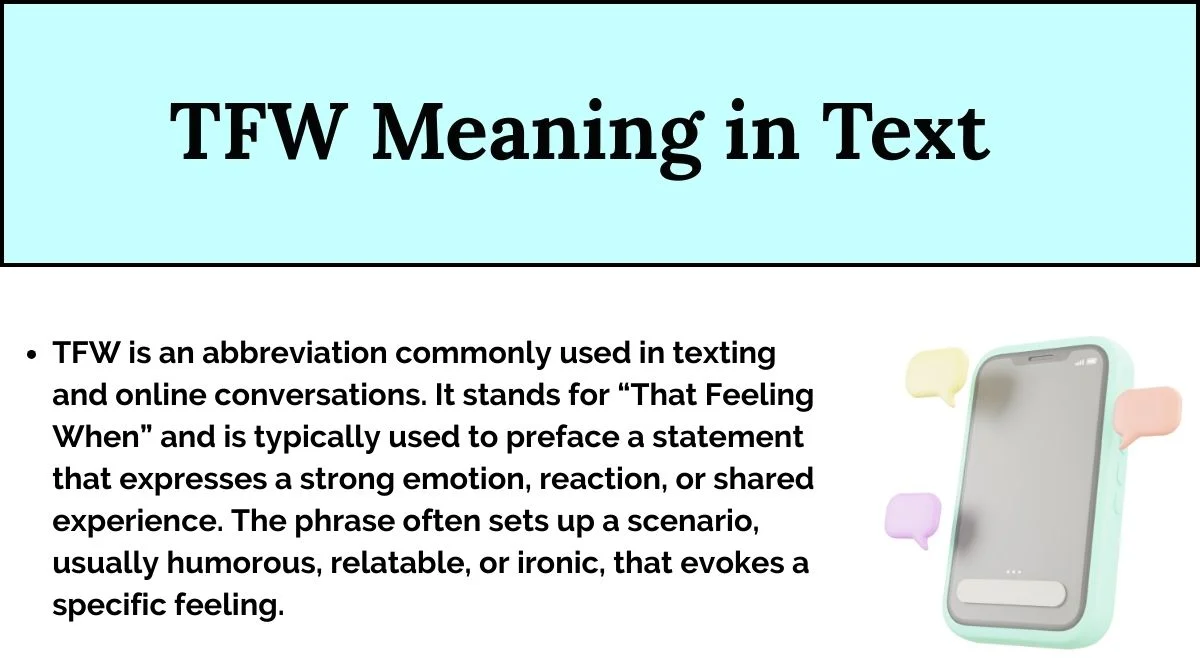
TFW is an abbreviation commonly used in texting and online conversations. It stands for “That Feeling When” and is typically used to preface a statement that expresses a strong emotion, reaction, or shared experience. The phrase often sets up a scenario, usually humorous, relatable, or ironic, that evokes a specific feeling.
For example, someone might write:
- “TFW you finish a long day and finally lie on the bed.”
Here, “tfw” emphasizes the relief and comfort experienced in that moment. The abbreviation helps convey emotion efficiently, especially in fast-paced messaging environments where brevity is appreciated.
Key Points:
- Type: Internet slang / abbreviation
- Purpose: Express emotion or reaction concisely
- Tone: Often humorous, relatable, or expressive
Background
The acronym TFW emerged from early internet forums and meme culture, primarily on platforms like Reddit and 4chan. Initially, it was used in text-based discussions to accompany images, gifs, or videos that illustrated a particular feeling. Over time, the phrase became a staple in memes, social media captions, and even marketing campaigns targeting younger audiences familiar with internet culture.
The evolution of “tfw” reflects a broader trend in online communication: users increasingly favor shorthand expressions to convey emotions without lengthy explanations. Its popularity soared alongside the rise of image-heavy platforms like Instagram and TikTok, where a single “tfw” caption paired with a relevant image could instantly communicate a shared experience.
Usage in Different Contexts
TFW is versatile and can appear in various contexts:
- Chat & Messaging Apps: WhatsApp, Facebook Messenger, or iMessage users often use “tfw” to react to relatable experiences.
- Social Media: Instagram, Twitter, and TikTok posts frequently include “tfw” in captions or memes.
- Professional Fields: While uncommon in formal communication, it may appear in casual work chats to lighten the tone among colleagues.
Example:
- Chat: “TFW your coffee kicks in, and you finally feel awake.”
- Instagram: Captioning a meme with “TFW it’s Friday and you survived the week.”
Meaning in Chat, WhatsApp, Instagram, TikTok
On messaging platforms, tfw serves as a shorthand to express shared feelings quickly. On Instagram and TikTok, users pair it with images or short clips to enhance relatability. The combination of “tfw” with visual content makes it a powerful tool for conveying emotion without needing long captions.
- WhatsApp: Casual conversations with friends, often paired with emojis.
- Instagram: Meme captions or lifestyle posts showing daily emotions.
- TikTok: Video reactions, challenges, or trending content hashtags.
Meaning in Physics, Medical, and Aircraft Terminology
Although “TFW” is widely recognized as internet slang, it also has technical meanings in specialized fields:
- Physics: May denote terms like Time-Frequency Wavelet in advanced research papers.
- Medical: Could stand for Total Fatty Weight in nutritional studies.
- Aviation: Sometimes used for Takeoff Weight, indicating the weight of an aircraft during takeoff.
Context is crucial to avoid confusion; in casual conversations, “tfw” almost always means “That Feeling When.”
Common Misconceptions
Many people mistakenly think “tfw” is an exclamation or a random acronym without meaning. Others confuse it with similar shorthand like “tbh” (to be honest) or “ftw” (for the win). The key difference is that “tfw” focuses on emotional reaction, while “ftw” conveys enthusiasm or success.
Similar Terms & Alternatives
Several terms carry similar meaning or can be used in place of “tfw”:
- Me IRL – Me in real life
- Mood – Expressing a feeling relatable to a situation
- That Moment When (TMW) – Slightly longer variant
- Relatable emojis – Using 😩, 😭, or 😂 to convey “tfw” visually
How to Respond to It
Responding to “tfw” depends on context:
- Empathetic: “I totally get that feeling 😅”
- Humorous: Share a related meme or GIF
- Engaging: Start a conversation about the shared experience
Differences from Similar Words
- TFW vs FTW: “TFW” expresses feelings; “FTW” celebrates victory or preference.
- TFW vs TMW: “TMW” (That Moment When) is nearly identical but slightly more formal.
- TFW vs Mood: “Mood” is broader and can be used standalone, while “tfw” always precedes a scenario.
Relevance in Online Conversations & Dating Apps
On dating apps or social media, “tfw” can serve as a conversational icebreaker, showing humor and relatability. It reflects emotional intelligence, signaling that the user can express feelings concisely. Brands also use “tfw” in campaigns targeting Gen Z and Millennials to create shareable content and enhance engagement.
Conclusion
Understanding tfw meaning in text is essential for navigating modern digital communication.
Its simplicity allows users to express complex emotions quickly and relatably.
Whether you encounter it in chats, social media posts, memes, or even specialized technical contexts, recognizing the intended meaning enhances comprehension and connectivity.
As online communication continues to evolve, acronyms like “tfw” will remain integral, bridging the gap between brevity and emotional expression.
By familiarizing yourself with its usage, alternatives, and proper responses, you can communicate more effectively, participate in trending conversations, and enjoy the richness of internet culture.

Joseph Roy crafts witty puns and punchlines that brighten your day. His playful twist on language keeps readers laughing and thinking.