In today’s fast-paced digital world, acronyms and abbreviations dominate text conversations, social media posts, and online messaging platforms.
One such term that frequently appears is “TW”. Many users encounter it and wonder about its meaning, context, and proper usage.
Understanding abbreviations like TW is not only helpful for clear communication but also for avoiding misunderstandings in both casual and professional settings.
People search for this term to decode messages on platforms like WhatsApp, Instagram, TikTok, or even professional emails where abbreviations are increasingly common.
This article aims to provide a comprehensive guide to TW meaning in text, explore its origins, context-specific usage, and clarify common misconceptions.
By the end, you’ll confidently know how to interpret TW in various situations and respond appropriately.
Meaning & Definition
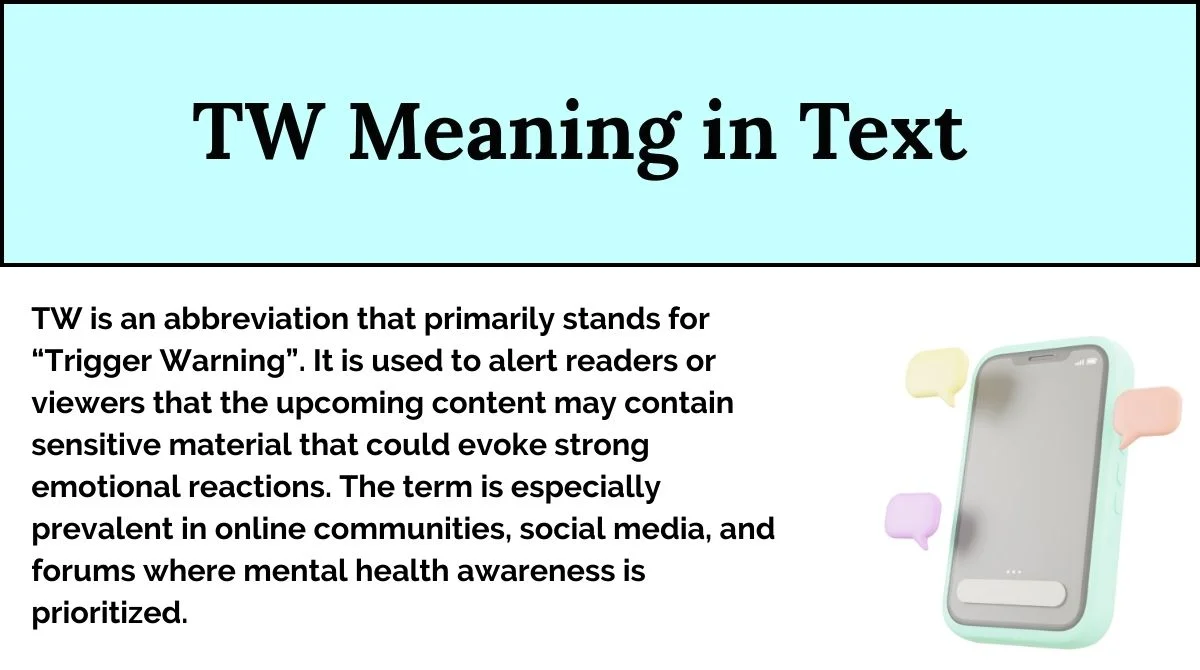
TW is an abbreviation that primarily stands for “Trigger Warning”. It is used to alert readers or viewers that the upcoming content may contain sensitive material that could evoke strong emotional reactions. The term is especially prevalent in online communities, social media, and forums where mental health awareness is prioritized.
For example, if someone shares a post about trauma, violence, or sensitive personal experiences, they might include TW at the beginning to warn the audience. Beyond its literal meaning, some casual chat users also interpret TW in other ways, depending on context, which we will explore later.
Key Takeaways:
- TW = Trigger Warning
- Purpose: To caution about potentially distressing content
- Common in social media, forums, and blogs
Background
The concept of Trigger Warnings originated in academic and therapeutic settings as a way to prepare individuals for discussions involving trauma, mental health, or sensitive topics. Over time, the abbreviation TW gained popularity online, especially on platforms like Tumblr, Twitter, and Instagram, where content spreads rapidly. The rise of awareness around mental health, trauma-informed care, and inclusive online spaces contributed to the mainstream adoption of this term.
Interestingly, while originally a serious tool for safeguarding emotional well-being, TW has also been adopted humorously or ironically in internet culture, sometimes marking trivial or exaggerated “sensitive” content.
Usage in Different Contexts
TW is versatile and can appear in multiple contexts:
- Casual Chat: Friends might use TW jokingly before mentioning something mildly upsetting or annoying.
- Social Media: Bloggers, TikTok creators, and Instagram influencers use TW in captions or video descriptions to signal sensitive topics.
- Professional Fields: Less common, but in certain psychology or counseling forums, TW may be used to maintain safe communication standards.
Context is key: while TW is often associated with online content, its meaning can shift slightly depending on the platform and audience.
Meaning in Chat, WhatsApp, Instagram, TikTok
On messaging apps and social media platforms:
- WhatsApp/Chat: TW is usually a prelude to sensitive messages, often in personal or group chats. Example: TW: Discussing family conflict.
- Instagram: Used in post captions or comments to indicate potentially distressing topics.
- TikTok: Content creators tag videos with TW to prevent unintended distress for viewers.
In these spaces, TW is a courtesy, helping audiences engage with content while safeguarding their emotional comfort.
Meaning in Physics, Medical, and Aircraft Terminology
Interestingly, TW also appears outside casual chats with entirely different meanings:
- Physics: TW can refer to terawatts, a unit of power equal to one trillion watts.
- Medical: In medical shorthand, TW might denote transverse wave in certain contexts.
- Aircraft: TW can indicate thrust weight ratio, important in aviation performance calculations.
These interpretations are technical and depend entirely on the professional context rather than social media usage.
Common Misconceptions
Many people mistakenly assume TW always means “Texting Words” or other casual phrases. Others confuse it with similar acronyms like CW (Content Warning). The main misconception is underestimating the importance of the warning—TW is meant to protect emotional well-being, not simply add filler to a post.
Similar Terms & Alternatives
Other acronyms serve a similar purpose:
- CW = Content Warning (broader than TW)
- NSFW = Not Safe for Work (explicit content warning)
- MHW = Mental Health Warning
While TW is specific to potentially triggering material, these alternatives may vary in scope and audience.
How to Respond to It
When you see TW:
- Acknowledge it: Respect the warning and proceed mindfully.
- React appropriately: Avoid dismissive comments; support the content creator if necessary.
- Skip if needed: TW allows users to make informed choices about engagement.
Respecting TW is part of responsible online etiquette.
Differences from Similar Words
- TW vs CW: TW focuses on emotional triggers, while CW may cover any sensitive content, not necessarily traumatic.
- TW vs NSFW: NSFW is about explicit or adult content, whereas TW can include emotional or psychological triggers.
Understanding these nuances ensures clear communication and reduces online misunderstandings.
Relevance in Online Conversations & Dating Apps
On dating apps or social platforms, TW helps maintain a safe space for sharing personal experiences. Users might mention past trauma, mental health struggles, or personal boundaries with a TW disclaimer. This promotes understanding, consent, and emotional safety in digital interactions.
Additionally, using TW responsibly can improve trust and connection with audiences or matches by signaling empathy and consideration.
Conclusion
In modern digital communication, TW meaning in text plays an essential role in protecting mental and emotional well-being.
While it originated as a serious precaution, its usage has expanded across social media, messaging platforms, and professional contexts.
Knowing when and how to use TW—whether in casual chats, content creation, or professional discussions—ensures clarity, empathy, and respectful interaction.
Awareness of its multiple interpretations, including technical uses in physics, medicine, and aviation, highlights the importance of context.
By understanding TW, users can navigate online spaces confidently, respond appropriately to sensitive material, and engage respectfully with others.
Ultimately, TW is more than an acronym—it reflects a culture of mindfulness and responsible communication in the digital age.

Joseph Roy crafts witty puns and punchlines that brighten your day. His playful twist on language keeps readers laughing and thinking.