Have you ever felt bored even when there was nothing obvious missing from your day?
The word ennui describes a deeper kind of boredom that often comes with restlessness, dissatisfaction, or a feeling that everything seems dull.
Unlike ordinary boredom, ennui can suggest emotional tiredness or a lack of interest in activities that would normally feel enjoyable.
People often search for ennui meaning because they encounter the word in books, social media posts, conversations, movies, or online discussions. It is also sometimes used in a more dramatic or thoughtful way to describe someone’s mood.
Understanding this word becomes easier when you look at its context. Someone might use it casually to describe a boring afternoon, while a writer may use it to express a deeper sense of emptiness or dissatisfaction.
In this guide, we will explore the meaning of ennui, its background, everyday uses, online meanings, related terms, and ways to respond when someone uses it in conversation.
Meaning & Definition
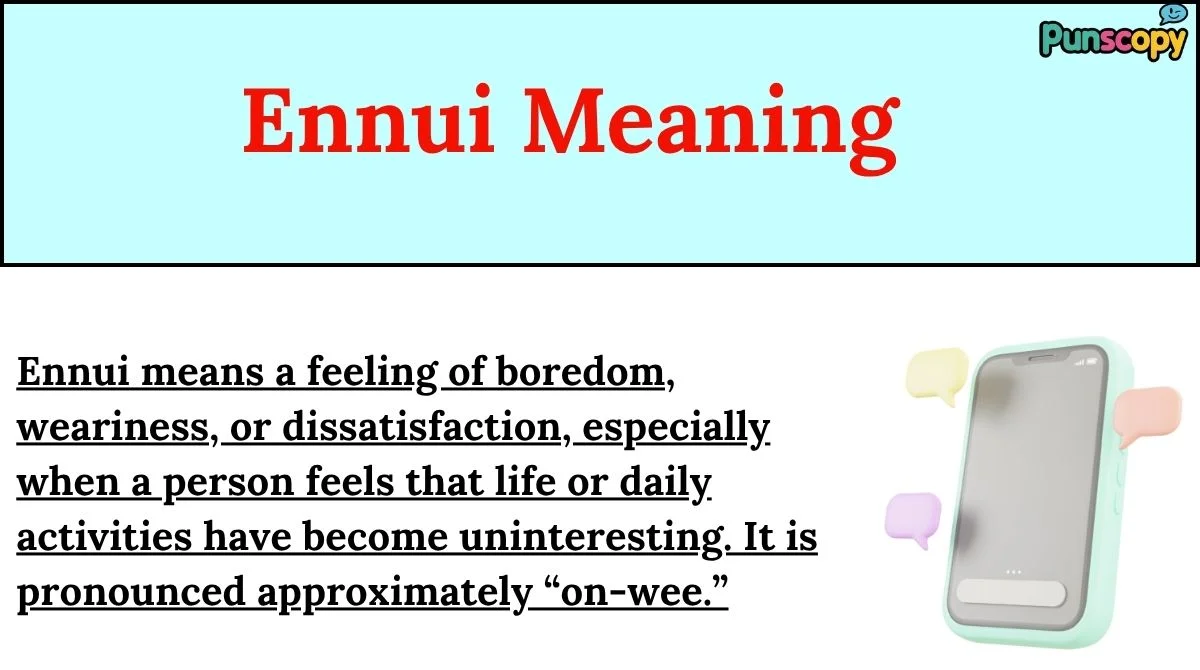
Ennui means a feeling of boredom, weariness, or dissatisfaction, especially when a person feels that life or daily activities have become uninteresting. It is pronounced approximately “on-wee.”
The word usually describes more than simply having nothing to do. For example, waiting for a bus for ten minutes can be boring, but that does not necessarily mean you are experiencing ennui. Ennui often suggests a longer-lasting or more emotional sense of dullness.
Someone experiencing ennui may feel restless despite having plenty of activities available. They may think, “Nothing sounds interesting,” even though there are many things they could do.
The term can also describe a general mood rather than a specific situation. A person might have a comfortable life but still feel emotionally unfulfilled. In that case, ennui can describe the sense that something is missing.
For example:
- “After months of doing the same routine, she began to feel ennui.”
- “The endless repetition of the job created a sense of ennui.”
- “He spent the afternoon scrolling through his phone, trying to escape his ennui.”
The word is often associated with boredom, but it can carry a more sophisticated or literary tone. In everyday English, people may simply say boredom, while writers may choose ennui when they want to communicate a deeper feeling of dissatisfaction.
Background
The history of ennui is closely connected with French language and literature. The English word was borrowed from French, where ennui has long been associated with boredom, weariness, and dissatisfaction.
Its deeper cultural meaning developed through literature and philosophical writing. Writers have often used the concept to describe people who feel emotionally disconnected from their surroundings or tired of repetitive experiences.
This is one reason the word can sound more serious than ordinary expressions such as “I’m bored.” Saying “I’m bored” usually describes a temporary situation. Saying “I’m experiencing ennui” can suggest a broader emotional state.
The concept has appeared in discussions about modern life, luxury, routine, isolation, and the search for meaning. A person with many entertainment options may still experience ennui if none of those activities feel meaningful.
Over time, the word became part of English vocabulary while retaining its somewhat sophisticated character. It can appear in novels, essays, journalism, academic writing, films, and everyday online posts.
Today, people may use it seriously or humorously. Someone might write, “Weekend ennui has officially arrived,” simply because they are tired of staying at home.
Therefore, understanding the background of the term helps explain why it can refer to both ordinary boredom and a deeper sense of dissatisfaction.
Usage in Different Contexts
The meaning of ennui generally remains connected to boredom or dissatisfaction, but its tone changes depending on where it appears.
In Casual Conversation
In everyday conversation, someone may use ennui when they want to describe feeling unusually bored or restless.
“I have nothing planned today, and I’m feeling serious ennui.”
Here, the speaker probably means that the day feels dull.
On Social Media
Social media users may use the word humorously or dramatically. A person might post:
“Another rainy Sunday, another battle with ennui.”
The post may simply mean that the person is bored.
In Professional Settings
In professional writing, ennui can describe dissatisfaction caused by repetitive or unchallenging work.
For example:
“Employees may experience ennui when their responsibilities become highly repetitive.”
Here, the word has a more formal tone.
In Literature
Authors may use ennui to describe a character’s emotional condition. In this context, it can suggest existential boredom, dissatisfaction, or emotional emptiness rather than simple lack of entertainment.
In Conversations About Lifestyle
The term can also appear when discussing routine, wealth, travel, relationships, or modern entertainment. Someone may have plenty of options but still feel unfulfilled.
Thus, the surrounding words are important. Ennui usually describes how a person feels, rather than simply describing an objectively boring activity.
Ennui Meaning in Chat, WhatsApp, Instagram, and TikTok
When ennui appears in chats or social media, it usually retains its standard meaning of boredom, weariness, or dissatisfaction. However, online communication often makes the word sound more casual or playful.
In Chat
If someone says:
“I’m drowning in ennui today.”
They probably mean they feel extremely bored or emotionally uninterested.
On WhatsApp
A WhatsApp message such as:
“Nothing to do. Ennui is winning 😂”
may simply be a humorous way of saying that the person has become bored.
On Instagram
Instagram captions may use the word to create a thoughtful, artistic, or sophisticated mood.
For example:
“Coffee, rain, and a little ennui.”
This could describe a quiet, reflective mood rather than serious emotional distress.
On TikTok
TikTok creators may use ennui in captions, jokes, or videos about repetitive routines, boredom, social isolation, or feeling uninterested.
The word may also be used ironically because it sounds more formal than simply saying “bored.”
Importantly, ennui is not normally a texting abbreviation or acronym. It is a regular vocabulary word. If someone sends it in a message, you should generally interpret it according to the surrounding conversation.
Meaning in Physics, Medical, and Aircraft Terminology
The word ennui does not have a standard specialized technical meaning in physics or aircraft terminology.
Physics
In physics, ennui is not a recognized technical concept, formula, unit, or physical property. If you see the word in physics-related material, it is likely being used in ordinary language rather than as scientific terminology.
Medical Context
In medical discussions, ennui is generally a descriptive word rather than a formal diagnosis. It can describe feelings of boredom, dissatisfaction, or emotional dullness, but it should not automatically be interpreted as a specific medical condition.
A person experiencing persistent loss of interest or other concerning symptoms may need to discuss those experiences with a qualified healthcare professional.
Aircraft or Aviation
There is also no standard aviation definition of ennui comparable to technical terms used for aircraft systems, navigation, or flight operations.
If you encounter the word in an aviation article, it may simply describe a person’s boredom, such as the boredom associated with repetitive tasks or long periods of waiting.
This distinction is important because many English words appear in different fields without becoming technical terms. Ennui normally keeps its everyday meaning regardless of the professional setting.
Common Misconceptions
Several misunderstandings can occur when people encounter ennui for the first time.
Misconception 1: Ennui Means Only Simple Boredom
Although boredom is part of its meaning, ennui can suggest a deeper sense of dissatisfaction or emotional weariness.
Misconception 2: It Is a Texting Acronym
It is not normally an acronym like LOL, BRB, or IDK. Ennui is a regular word borrowed from French.
Misconception 3: It Always Indicates a Serious Mental Health Problem
Using the word does not automatically mean someone has a mental health disorder. People often use it casually to describe boredom or a dull mood.
Misconception 4: It Always Has a Negative or Dramatic Meaning
Context matters. Someone can use the word playfully or humorously.
Misconception 5: Ennui and Boredom Are Always Identical
The two words overlap, but ennui often carries a stronger sense of dissatisfaction, weariness, or lack of fulfillment.
Understanding these differences prevents you from overinterpreting a person’s message.
Similar Terms & Alternatives
Several English words are related to ennui, although they are not perfect substitutes in every situation.
Boredom
This is the closest everyday alternative. It describes a lack of interest or stimulation.
Weariness
Weariness emphasizes tiredness, although it does not necessarily involve boredom.
Apathy
Apathy refers to a lack of interest, enthusiasm, or concern. It can overlap with ennui but often carries a stronger sense of emotional indifference.
Restlessness
Restlessness describes difficulty staying calm or satisfied, often because you want something different to happen.
Listlessness
Listlessness suggests a lack of energy or enthusiasm.
Tedium
Tedium refers to the dullness caused by repetitive or monotonous activity.
Dissatisfaction
Dissatisfaction emphasizes the feeling that something is not fulfilling or satisfactory.
Depending on the situation, boredom, tedium, restlessness, apathy, or dissatisfaction may be more natural choices than ennui.
How to Respond to “Ennui”
If someone uses ennui in a message, your response should depend on what they mean.
If they simply sound bored, you could say:
- “Want to do something fun?”
- “What are you in the mood for?”
- “Let’s find something interesting to do.”
- “Sounds like you need a change of scenery!”
If they sound emotionally dissatisfied, a more thoughtful response may be appropriate:
- “What’s making you feel that way?”
- “Do you want to talk about it?”
- “Maybe you need a break from the usual routine.”
If they use the word jokingly, you can respond playfully:
“Looks like boredom has officially entered the chat!”
The key is to read the surrounding message. Ennui can describe anything from ordinary boredom to a more reflective feeling of dissatisfaction, so your response should match the tone.
Differences From Similar Words
Although many words overlap with ennui, their meanings are not exactly the same.
| Word | Main Idea |
|---|---|
| Ennui | Boredom mixed with dissatisfaction or weariness |
| Boredom | Lack of interest or stimulation |
| Apathy | Lack of interest, concern, or enthusiasm |
| Tedium | Dullness caused by repetitive activity |
| Restlessness | Difficulty feeling settled or satisfied |
| Listlessness | Low energy or enthusiasm |
| Weariness | Feeling tired or exhausted |
For example, imagine someone performing the same task every day.
They may experience tedium because the task is repetitive. They may feel boredom because it does not interest them. If the repetitive lifestyle makes them feel generally dissatisfied, ennui may be a more appropriate description.
This is why context matters when selecting the right word.
Relevance in Online Conversations & Dating Apps
On dating apps, ennui can appear when people discuss repetitive conversations, disappointing dates, or feeling tired of predictable interactions.
For example:
“I’m suffering from dating-app ennui.”
This could mean the person feels bored with seeing the same profiles, answering similar questions, or having conversations that never develop.
Someone might also use the term playfully:
“Another ‘hey, how are you?’ message. The ennui is real.”
In this example, the speaker is probably expressing frustration with repetitive conversations rather than describing a serious emotional condition.
If someone tells you they feel ennui while dating, a thoughtful response could acknowledge their experience:
“I get that. Maybe we should skip the usual small talk.”
The term can therefore communicate boredom with repetition and a desire for something more engaging.
FAQs
What does ennui mean in simple words?
Ennui means a feeling of boredom, restlessness, or dissatisfaction, especially when ordinary activities no longer seem interesting.
Is ennui the same as boredom?
They are closely related, but ennui can suggest a deeper or more lasting feeling of dissatisfaction than ordinary boredom.
How do you pronounce ennui?
It is commonly pronounced approximately “on-wee.”
Is ennui a slang word?
No. Ennui is a standard English word borrowed from French. However, people may use it casually or humorously on social media.
What does ennui mean in texting?
In texting, ennui usually means boredom, weariness, or dissatisfaction. The exact tone depends on the surrounding conversation.
Is ennui a medical diagnosis?
No. Ennui is a descriptive word, not a medical diagnosis.
Can ennui be used humorously?
Yes. People often use the word playfully to make ordinary boredom sound dramatic or sophisticated.
What is another word for ennui?
Depending on the context, alternatives include boredom, tedium, apathy, restlessness, listlessness, and dissatisfaction.
Conclusion
Ennui describes more than simply having nothing to do. It can express boredom, restlessness, weariness, or a deeper feeling that everyday experiences have become dull and unfulfilling.
The word is useful because it captures a particular kind of dissatisfaction that ordinary words such as “bored” may not fully express.
In texts, WhatsApp messages, Instagram captions, TikTok posts, literature, and everyday conversations, its meaning generally depends on context.
Someone may use it seriously to describe a prolonged sense of dullness or casually as a humorous way to complain about a boring day.
Understanding the difference between ennui and related words such as boredom, tedium, apathy, and restlessness can make the term much easier to interpret.
When someone uses it online, focus on the surrounding message and tone before deciding exactly what they mean.

Joseph Roy crafts witty puns and punchlines that brighten your day. His playful twist on language keeps readers laughing and thinking.