Internet slang changes quickly, and some words can take on completely different meanings in online conversations.
Glaze is one example that can confuse people when they see it in a text, comment, or social media post.
In everyday slang, it is often used to describe someone who gives another person too much praise, admiration, or attention, especially when that praise seems excessive or unnecessary.
People commonly search for this expression because they may see comments such as “Stop glazing him” or “You are glazing her” and wonder whether the word has a special meaning.
The meaning can depend on the conversation, relationship between the people, and platform where it appears.
Understanding the context is important because “glaze” also has several ordinary meanings outside slang. It can refer to a shiny coating on food, pottery, or other materials. It may also appear in technical or professional language.
Meaning & Definition
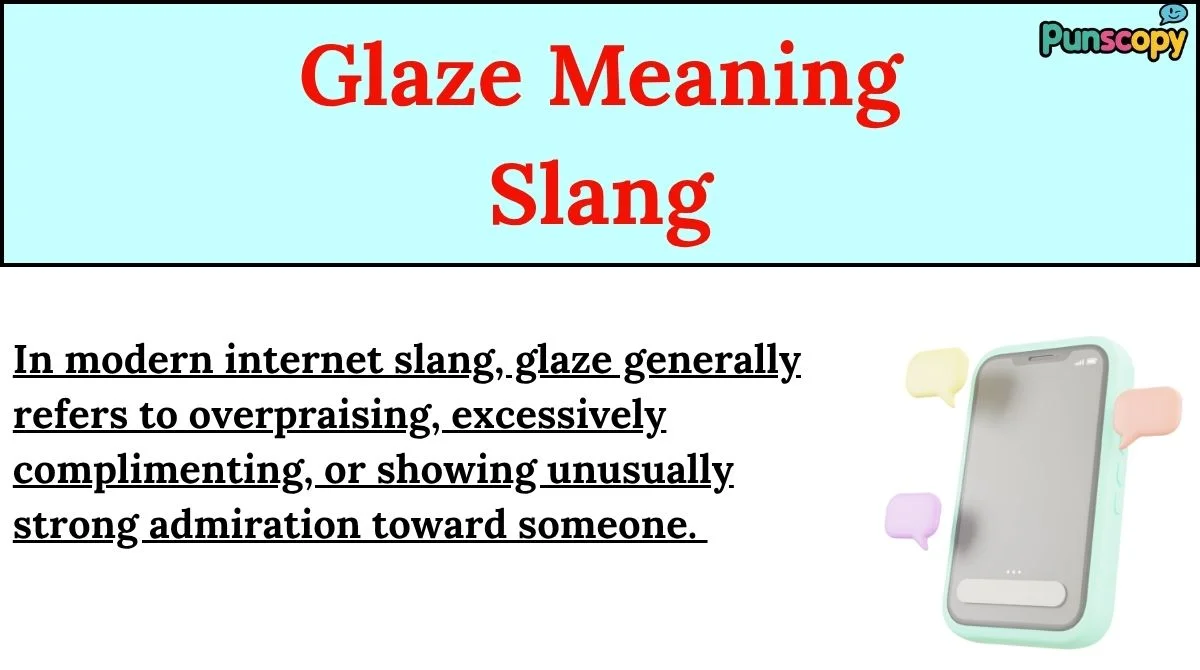
In modern internet slang, glaze generally refers to overpraising, excessively complimenting, or showing unusually strong admiration toward someone. It is often used when a person believes that another individual is giving someone far more praise than they deserve.
For example, if someone constantly compliments a celebrity, athlete, streamer, or friend, another person might jokingly say, “You are glazing.”
The expression can be playful, teasing, or critical. Its exact tone depends heavily on the situation. Among friends, it may simply be a joke about someone being an enthusiastic supporter. In another conversation, it can be used to criticize someone for appearing overly biased.
The word is frequently connected with online discussions involving celebrities, sports players, gaming personalities, influencers, and content creators. Someone might repeatedly defend or praise a particular person, leading others to accuse them of “glazing.”
It is also important to understand that slang does not always have one fixed definition. Different communities can use the same word slightly differently. Some people use it for excessive compliments, while others use it more broadly for extreme admiration or unnecessary praise.
The simplest way to understand the slang is:
Glaze = to praise or admire someone excessively.
The noun form can also appear in expressions such as “glazing,” referring to the act of giving excessive praise. The word is normally informal and is most common in casual digital communication.
Background
The slang use of this word developed as part of the constantly changing vocabulary of internet culture. Online communities frequently transform ordinary words into humorous expressions with completely different meanings.
In this case, the everyday meaning of a glaze involves covering something with a layer or coating. Internet users began using the word metaphorically to describe someone who seems to “lay it on thick” with compliments or admiration.
Over time, the expression became increasingly common in online conversations, especially among younger internet users. Social media comments, livestream chats, gaming communities, sports discussions, and short-form video platforms helped spread the term.
The slang is often used humorously rather than literally. Someone does not actually need to be obsessed with another person for the expression to be used. A friend might say it simply because someone gave an unusually enthusiastic compliment.
For example, imagine two friends discussing a basketball player. One person says that the player is the greatest athlete ever, while the other responds, “Bro, stop glazing.” The second person is probably teasing the first person for giving the athlete excessive praise.
The expression can also become part of internet humor. People sometimes deliberately exaggerate their admiration to make a joke, knowing that others will describe it as glazing.
Because slang develops quickly, meanings can shift between online communities. The expression should therefore be interpreted based on the surrounding conversation instead of assuming that every use has exactly the same intention.
Usage in Different Contexts
The expression can appear in many informal online settings. Its meaning usually remains connected to excessive praise, but the tone can change depending on the situation.
In Casual Chat
Friends may use it to tease someone who is complimenting another person too much. It can be playful rather than genuinely insulting.
On Social Media
People often use the expression in comments about celebrities, athletes, musicians, influencers, or public personalities. A user may accuse another commenter of “glazing” when they believe the praise is exaggerated.
In Sports Discussions
Sports communities frequently use the term when fans strongly praise a particular player. If someone repeatedly describes their favorite player as unbeatable or perfect, another fan may jokingly call that behavior glazing.
In Gaming Communities
Gamers may use it when someone excessively praises a professional player, streamer, game developer, or character.
In Professional Fields
The slang meaning is generally inappropriate for formal professional communication. A workplace email, academic paper, or official report would normally use clearer expressions such as excessive praise, overpraising, or uncritical admiration.
The key point is that this expression is primarily informal. It works naturally in casual digital conversations but may sound unprofessional in serious settings.
Meaning in Chat, WhatsApp, Instagram, and TikTok
In messaging apps and social platforms, the expression usually has a straightforward slang meaning: giving someone too much praise or admiration.
On WhatsApp, a friend might send a message praising another person repeatedly. Someone could respond with “You are glazing 😂.” The laughing emoji would make it clear that the comment is probably playful.
On Instagram, the term may appear under a celebrity’s photograph or video. If several users are praising the person intensely, someone may comment that people are “glazing.”
TikTok has also helped popularize many rapidly changing slang expressions. In short videos and comments, the word can be used as a humorous reaction to exaggerated compliments.
The expression can be directed toward almost anyone. It may involve a friend, celebrity, athlete, fictional character, musician, influencer, or online creator.
However, the tone matters. If someone says “Stop glazing,” they may simply be joking. If they say it during a serious argument, they may be criticizing the other person’s judgment or suggesting that the praise is excessive.
Contextual clues such as emojis, punctuation, previous messages, and the relationship between the speakers can help reveal the intended tone.
Meaning in Physics, Medical, and Aircraft Terminology
The slang interpretation should not be confused with technical meanings of the word.
Physics
In physics-related contexts, glaze is not normally a standard slang expression. A technical discussion may use the word when describing a surface coating, material layer, or physical process involving a coating or deposit. The surrounding scientific terminology determines the exact meaning.
Medical Context
Medical professionals may encounter the ordinary word in descriptions of substances, coatings, surfaces, or procedures, depending on the specialty. It should not automatically be interpreted as internet slang simply because the word appears in a digital message.
Aircraft Terminology
In aviation, technical language can include terms related to surface coatings, icing, materials, and aircraft components. A word that looks like casual internet slang may therefore have a completely different meaning in an aviation document or technical discussion.
This distinction is important because slang depends on social context. If the word appears in a research paper, medical document, engineering discussion, or aircraft manual, the intended meaning is likely to be determined by that professional subject rather than internet culture.
When interpreting a message, always consider the words surrounding the term before deciding what it means.
Common Misconceptions
One common misconception is that this expression always means something extremely negative. That is not necessarily true. Friends frequently use it as playful teasing.
Another misconception is that anyone who compliments another person is automatically “glazing.” The slang generally implies excessive or exaggerated praise, not ordinary appreciation.
For example, saying “That was a great performance” is simply a compliment. Repeatedly claiming that someone is perfect, unbeatable, and better than everyone else might be described as glazing in a joking conversation.
Some people also assume that the word always indicates romantic attraction. That is not necessarily the case. A person can “glaze” an athlete, celebrity, gamer, fictional character, or friend without any romantic meaning.
Another misunderstanding comes from confusing the slang meaning with the ordinary dictionary meaning of the word. In traditional English, glaze can refer to a shiny coating placed on food, pottery, or other surfaces.
Finally, slang can vary from one online community to another. The safest approach is to examine the complete sentence and conversation instead of relying on a single-word definition.
Similar Terms & Alternatives
Several informal expressions can communicate ideas similar to this slang usage, although they are not always exact replacements.
Overpraise means giving someone more praise than may be appropriate or reasonable.
Suck up can describe someone who behaves overly positively toward another person to gain approval or favor. Its meaning is more negative in many situations.
Fanboying or fangirling can describe extremely enthusiastic support for a person, celebrity, product, or fandom. It can be playful and does not necessarily mean the same thing.
Bootlicking is a much harsher expression and usually suggests excessive submission or praise toward someone with power.
Admiring is much more neutral. A person can admire someone without exaggerating their qualities.
Complimenting is also neutral and simply means expressing praise or approval.
The difference is mainly intensity and intention. Ordinary admiration or praise is not automatically excessive. The slang expression generally appears when someone believes the praise has gone beyond normal appreciation.
How to Respond to It
If someone tells you that you are “glazing,” your response can depend on the tone of the conversation.
If they are joking, you can respond playfully:
- “I’m just giving credit where it’s due.”
- “Let me appreciate my favorite.”
- “Maybe I am, so what? 😂”
- “I stand by what I said.”
If you want to disagree with the accusation, you can keep your response simple:
- “I’m not glazing; I genuinely think they did well.”
- “I’m just complimenting them.”
- “You can disagree, but that’s my opinion.”
If you are unsure what the person means, asking directly is perfectly reasonable:
“What do you mean by glazing?”
You do not need to take the expression personally. In many online conversations, it is simply a humorous way of pointing out that someone seems overly enthusiastic.
The best response depends on whether the conversation is friendly, argumentative, or serious.
Differences From Similar Words
The expression differs from several related terms because it focuses on excessive praise or admiration.
Complimenting usually means giving someone a positive comment. It can be completely normal and sincere.
Praising is a broader term for expressing approval or admiration. It does not necessarily suggest that the praise is excessive.
Admiring means holding someone or something in high regard. It is generally neutral.
Fanboying can involve intense enthusiasm for a person, product, game, or fandom. It may overlap with the slang usage but has a broader fan-culture meaning.
Sucking up usually involves excessive friendliness or praise intended to gain approval or a benefit. This can involve a more deliberate motive.
Glazing, in contrast, is commonly used as an informal accusation that someone is praising or admiring another person far more than necessary.
The terms can overlap, but they should not be treated as exact synonyms. The speaker’s intention and the surrounding conversation determine which interpretation makes the most sense.
Relevance in Online Conversations & Dating Apps
Internet slang can also appear in dating conversations, although the meaning remains connected to excessive praise.
For example, if someone continuously compliments another person on a dating app, a friend might jokingly say that they are “glazing.” In this setting, the comment could suggest that the person is giving too many compliments too quickly.
However, ordinary flirting should not automatically be considered glazing. Flirting can involve compliments, playful comments, or expressions of interest without being excessive.
The expression may also appear when people discuss attractive celebrities or influencers. Someone might make a very enthusiastic comment, and another user may respond with the slang as a joke.
On dating apps, context is particularly important. A playful remark between two people may have a completely different tone from an accusation during an argument.
If someone uses the expression toward you, consider what happened immediately before it. Were you repeatedly praising someone? Were you defending them strongly? Were you simply making one positive comment?
Understanding that context can help you decide whether the person is joking, teasing, or genuinely criticizing your behavior.
FAQs
What does glaze mean in slang?
In slang, it usually means giving someone excessive praise, admiration, or compliments. It is often used humorously to tease someone who appears overly enthusiastic about another person.
What does “stop glazing” mean?
“Stop glazing” generally means stop praising or admiring that person so much. Depending on the conversation, it can be a joke or a criticism.
Is glazing always negative?
No. It can be playful teasing among friends. The tone depends on the context, relationship, and wording of the conversation.
Does glazing mean having a crush?
Not necessarily. The expression can involve celebrities, athletes, gamers, friends, fictional characters, or other people. Romantic interest is only one possible context.
What does glazing mean on TikTok?
On TikTok, it commonly refers to excessive praise or admiration in comments, videos, or discussions. Users may use it humorously when someone appears overly enthusiastic about another person.
What does glazing mean in texting?
In texting, it usually refers to someone giving another person too many compliments or showing excessive admiration. The exact tone depends on the surrounding messages.
Is glazing the same as complimenting?
No. A compliment can be normal and sincere. Glazing generally suggests that the praise is excessive, exaggerated, or unusually enthusiastic.
Can you use glaze in formal writing?
It is better to avoid the slang meaning in formal writing. In professional or academic contexts, clearer expressions such as “excessive praise” or “overpraising” are more appropriate.
Conclusion
The slang use of glaze has become part of casual internet vocabulary, particularly in conversations involving celebrities, athletes, influencers, gamers, and online personalities.
It generally describes excessive praise, admiration, or enthusiastic support toward another person.
The expression can be playful, humorous, or critical depending on the situation. It does not automatically indicate romantic interest, and it should not be confused with ordinary compliments or admiration.
Context remains the most important factor. A message between friends may use the word as a joke, while a serious argument may use it to criticize someone for being overly biased.
Outside internet slang, the word has traditional and technical meanings as well. Therefore, the surrounding subject should always be considered before interpreting it.

Joseph Roy crafts witty puns and punchlines that brighten your day. His playful twist on language keeps readers laughing and thinking.