In today’s digital age, abbreviations and acronyms have become an essential part of online communication.
One of the most frequently used acronyms is LMFAO, which often pops up in text messages, social media comments, and chat platforms.
People search for LMFAO meaning in text to decode conversations, understand humor, and avoid miscommunication.
Despite its prevalence, not everyone knows what it stands for or how to use it appropriately.
Understanding this term is not just about knowing its literal meaning but also recognizing the contexts where it is commonly applied.
Whether it’s a funny meme on Instagram, a TikTok video caption, or casual chatting on WhatsApp, LMFAO has carved its place in internet culture.
This article explores its meaning, origin, applications, misconceptions, and alternatives, giving you a comprehensive understanding of this popular digital expression.
Meaning & Definition
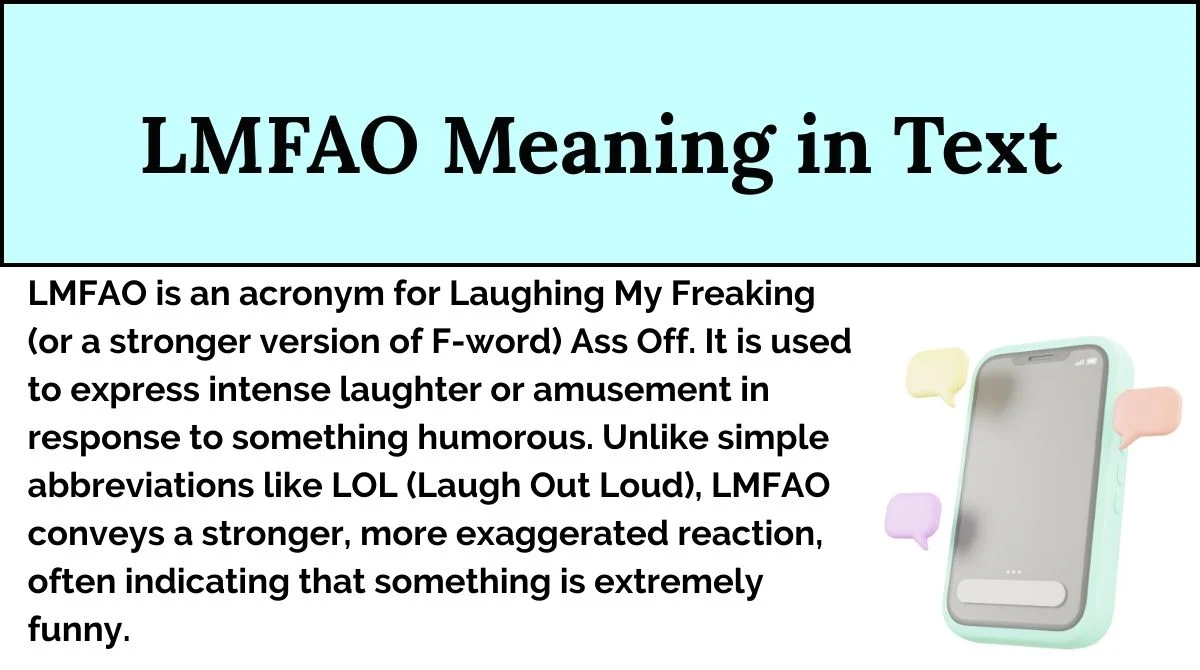
LMFAO is an acronym for Laughing My Freaking (or a stronger version of F-word) Ass Off. It is used to express intense laughter or amusement in response to something humorous. Unlike simple abbreviations like LOL (Laugh Out Loud), LMFAO conveys a stronger, more exaggerated reaction, often indicating that something is extremely funny.
Key points about LMFAO:
- It is primarily informal and used in casual conversations.
- It is expressive, often reflecting a genuine or emphatic emotional response.
- While popular online, it is considered inappropriate in formal or professional contexts due to the implied expletive.
Background
The use of acronyms like LMFAO stems from the early days of internet messaging, when brevity was essential due to character limits on text messages or online chat platforms. Over time, LMFAO became widely recognized on social media platforms, forums, and meme culture. The term gained additional visibility from pop culture, including the music duo LMFAO, known for humorous and party-themed songs, which contributed to the acronym’s association with fun and laughter.
Usage in Different Contexts
1. Chat & Social Media: LMFAO is a staple in casual messaging, comments, and replies. Users employ it when reacting to jokes, memes, or funny videos.
2. Professional Fields: Generally, LMFAO is avoided in professional emails or workplace communication. Its informal tone and potential vulgarity make it unsuitable in formal scenarios. Some may substitute it with LOL or Haha in professional chats.
3. Creative Media: On platforms like TikTok, Instagram, or YouTube, LMFAO enhances engagement, giving viewers a sense of relatability and humor. It’s often paired with emojis like 😂 or 🤣 to emphasize the reaction.
Meaning in Chat, WhatsApp, Instagram, TikTok
In instant messaging and social media, LMFAO serves as a quick, emotional reaction:
- WhatsApp: Used in group chats to express exaggerated laughter over shared messages or memes.
- Instagram: Appears in comments on posts or funny reels.
- TikTok: Often seen in captions or comment threads to show amusement at content.
It functions as a digital shorthand, saving time while clearly conveying the intensity of laughter.
Meaning in Physics, Medical, and Aircraft Terminology
Interestingly, LMFAO has no formal recognition in professional or technical fields like physics, medicine, or aviation. Using it in these contexts would generally be inappropriate. Professionals in these sectors prefer precise, discipline-specific terminology rather than internet slang.
Common Misconceptions
Some common misconceptions about LMFAO include:
- Thinking it is a polite or neutral term—it actually carries a strong informal or slightly vulgar undertone.
- Confusing it with LMAO, which is similar but slightly less intense.
- Assuming it is suitable in professional settings—context is key, and it is rarely appropriate outside casual communication.
Similar Terms & Alternatives
Several alternatives express similar reactions online:
- LOL (Laugh Out Loud) – mild laughter.
- ROFL (Rolling on the Floor Laughing) – indicates extreme amusement.
- HAHA – simple, general laughter.
- LMAO – slightly less vulgar version of LMFAO.
Each term varies in intensity and appropriateness depending on the platform and audience.
How to Respond to It
When someone sends LMFAO, consider the context:
- Friendly chat: Respond with emojis 😂🤣, “same,” or another laugh abbreviation.
- Memes or posts: Like, share, or comment with similar humor.
- Professional chat: Ignore or respond with a neutral tone; avoid reciprocating the slang.
Differences from Similar Words
| Term | Intensity | Context Suitability | Notes |
|---|---|---|---|
| LOL | Mild | Casual/Professional | Common and safe |
| LMAO | Moderate | Casual | Less vulgar than LMFAO |
| LMFAO | High | Casual Only | Strong emphasis, vulgar tone |
| ROFL | High | Casual | Often exaggerated humor |
Relevance in Online Conversations & Dating Apps
LMFAO is widely used to:
- Express humor and relatability.
- Signal personality traits, like being fun-loving.
- Maintain casual, light-hearted conversation in dating apps, chatrooms, and social media.
It’s part of a broader digital culture that emphasizes quick, emotional, and expressive reactions over formal communication.
Conclusion
Understanding LMFAO meaning in text helps decode online interactions and adds clarity to digital conversations.
Its informal, humorous tone makes it suitable for casual chats, memes, and social media engagement, but inappropriate for professional contexts.
Recognizing its intensity compared to other acronyms like LOL or LMAO ensures proper usage, enhancing communication and preventing misinterpretations.
As digital slang evolves, acronyms like LMFAO remain relevant, reflecting how humor and emotion are expressed in online culture.
Whether chatting with friends, commenting on social media, or reacting to viral content, LMFAO continues to serve as a fun, emphatic shorthand for laughter.

Joseph Roy crafts witty puns and punchlines that brighten your day. His playful twist on language keeps readers laughing and thinking.