The word ennui describes a feeling of boredom, dissatisfaction, or emotional weariness that goes beyond simply having nothing to do.
It is often used when someone feels uninterested, restless, or mentally tired because their surroundings or routine seem repetitive and unexciting.
People search for the ennui meaning because the word appears in books, social media posts, conversations, captions, dating profiles, and discussions about emotions.
Unlike ordinary boredom, ennui can suggest a deeper sense of emptiness or lack of stimulation. Someone may have plenty of activities available but still feel disconnected from them.
The term is also common in literature, psychology-related discussions, and everyday expressive language.
Understanding this word can help you interpret someone’s message or caption more accurately. Its exact meaning can depend on the situation, tone, and context in which it is used.
Meaning & Definition
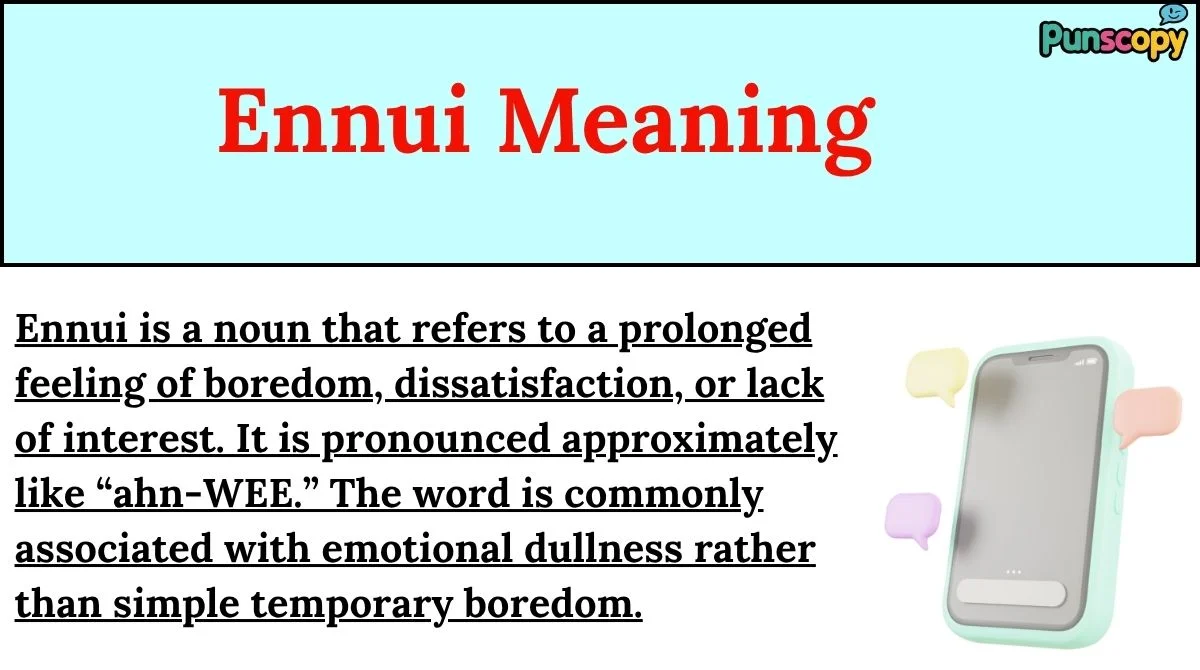
Ennui is a noun that refers to a prolonged feeling of boredom, dissatisfaction, or lack of interest. It is pronounced approximately like “ahn-WEE.” The word is commonly associated with emotional dullness rather than simple temporary boredom.
For example, someone might say, “I spent the entire afternoon in a state of ennui.” This suggests that they felt uninterested and mentally unengaged for an extended period.
The feeling can occur when life becomes repetitive. Doing the same tasks every day, having little excitement, or feeling disconnected from personal goals can contribute to a sense of ennui.
The word can also describe a particular mood or atmosphere. A person might describe a quiet afternoon as being filled with ennui, especially if nothing seems stimulating or meaningful.
In modern writing, ennui often sounds more sophisticated or literary than words such as “boredom” or “tiredness.” It can communicate a combination of restlessness, apathy, and dissatisfaction.
However, it does not automatically mean sadness or depression. Someone experiencing ennui may simply feel uninterested or emotionally under-stimulated.
Background and Origin of Ennui
The term ennui comes from French and has historical connections to expressions describing feelings of boredom, weariness, or dissatisfaction. It eventually became established in English as a word for a particular type of prolonged boredom.
The concept has appeared frequently in literature because writers have long explored what happens when people feel trapped in repetitive or unfulfilling situations. Characters experiencing wealth, comfort, isolation, or routine have sometimes been described as suffering from ennui.
Over time, the word developed a somewhat literary and sophisticated tone. It can still be used in everyday conversation, but it is less common than simpler expressions such as “bored,” “restless,” or “fed up.”
Today, people may use it humorously or dramatically online. For example, someone might post a picture of themselves lying on a couch with the caption “Weekend ennui.” In that context, the word may simply add a playful or dramatic description to an ordinary lazy day.
Its modern meaning remains centered on boredom mixed with dissatisfaction or emotional restlessness.
Usage in Different Contexts
The meaning of ennui can shift slightly depending on where it appears. In ordinary conversation, it usually refers to an extended feeling of boredom or lack of excitement.
In chat, someone might use the word to describe feeling mentally unstimulated. For example, “I have nothing planned today, and the ennui is real.” The speaker is probably saying that the day feels dull.
On social media, the term can be used more creatively. A person might write “Sunday ennui” under a photo of a quiet room, coffee, or a lazy afternoon. Here, the word may describe an aesthetic mood rather than serious emotional distress.
In professional writing, ennui can describe dissatisfaction caused by repetitive work or a lack of intellectual stimulation. For instance, an employee might experience ennui when their job involves performing the same task every day.
In literature, the word can have a deeper emotional meaning. It may describe a character who feels disconnected from life, purpose, excitement, or personal fulfillment.
The surrounding words usually reveal how serious the speaker intends the expression to be.
Ennui Meaning in Chat, WhatsApp, Instagram, and TikTok
In online conversations, ennui generally means boredom, restlessness, or feeling emotionally uninterested.
On WhatsApp, someone might send “I’m suffering from ennui today” to explain that they feel bored and have nothing interesting happening. Friends may respond by suggesting an activity or starting a conversation.
On Instagram, the word can appear in captions with a more aesthetic or dramatic tone. A person might use “ennui” to describe a quiet, slow, or repetitive day.
On TikTok, the term may appear in videos about boredom, routines, lifestyle, relationships, or feeling stuck. Sometimes creators use it humorously to describe an ordinary situation.
For example:
“Another weekend, another case of ennui.”
This does not necessarily indicate a serious emotional problem. It could simply mean the person is tired of having nothing exciting to do.
Because online language is flexible, context matters. If someone says “I’m feeling ennui lately,” they may be describing a longer period of dissatisfaction. If they write “Sunday ennui,” they may simply be joking about a boring weekend.
Ennui Meaning in Physics, Medical, and Aircraft Terminology
Physics
Ennui is not a standard physics term. It does not represent a recognized physical quantity, law, force, unit, or technical principle in conventional physics terminology.
If you encounter the word in a physics-related discussion, it is most likely being used in an ordinary descriptive or literary sense rather than as scientific terminology.
Medical Context
Ennui is also not a specific medical diagnosis. The word can describe a subjective feeling of boredom, dissatisfaction, or emotional weariness, but it should not automatically be interpreted as a clinical condition.
Someone experiencing persistent loss of interest or emotional difficulties may use the word casually, but determining whether those experiences relate to a medical or psychological condition requires appropriate professional assessment.
Aircraft Terminology
In aviation, ennui is not a standard aircraft term, flight abbreviation, or technical aviation code. If you see it near aviation content, it is likely being used descriptively—for example, to discuss the boredom of a long journey or repetitive travel experience.
This distinction is important because many abbreviations and specialized terms exist in technical fields, while ennui primarily belongs to everyday and literary vocabulary.
Common Misconceptions About Ennui
One common misconception is that ennui simply means ordinary boredom. Although boredom is part of the meaning, ennui can suggest a deeper or more prolonged feeling of dissatisfaction and emotional dullness.
Another misconception is that ennui always means depression. That is not accurate. Ennui is a descriptive word for a feeling or state of mind and is not, by itself, a medical diagnosis.
Some people also assume that the word must always describe sadness. In reality, someone experiencing ennui may feel neutral, restless, uninterested, frustrated, or simply under-stimulated.
Another misunderstanding involves online usage. When someone writes “I have ennui” on social media, they may be using the term playfully. The post does not necessarily indicate serious emotional distress.
Finally, ennui is sometimes mistaken for a technical term because it sounds formal. It is not a standard physics, aviation, or medical technical term. Its primary use is descriptive, conversational, and literary.
Similar Terms and Alternatives
Several words are related to ennui, but they are not always interchangeable.
Boredom is the closest everyday alternative. It describes a lack of interest or stimulation, especially when there is nothing engaging to do.
Apathy refers more strongly to a lack of interest, motivation, or emotional response. A person can feel apathetic even when activities are available.
Restlessness emphasizes the inability to remain comfortable or satisfied with the current situation.
Dullness describes something lacking excitement, energy, or interest.
Lethargy generally refers to low energy or sluggishness rather than simply being bored.
Weariness suggests tiredness or exhaustion and does not necessarily involve boredom.
Other possible alternatives include listlessness, dissatisfaction, monotony, tedium, and disinterest. The best substitute depends on the specific sentence.
For example, “I’m bored” is natural in casual conversation, while “I’m experiencing ennui” sounds more literary or sophisticated.
How to Respond to Ennui
Your response should depend on how the person uses the word.
If someone says, “I’m feeling ennui today,” a friendly response could be:
- “Sounds like you need something fun to do.”
- “Want to go somewhere?”
- “I know that feeling. What would make today more interesting?”
- “Let’s find something different to do.”
If the person is using the word jokingly, you can respond playfully:
“Emergency boredom protocol activated!”
If the person appears to be describing a longer period of dissatisfaction, a more thoughtful response may be appropriate:
“That sounds frustrating. Do you know what’s been making you feel this way?”
In a romantic conversation, the response can be more personal:
“Maybe we should find something exciting to do together.”
The key is to consider the person’s tone. A humorous caption calls for a light response, while a serious statement may deserve empathy and a genuine conversation.
Differences Between Ennui and Similar Words
Although several words overlap with ennui, their emotional emphasis can differ.
| Word | Main Idea |
|---|---|
| Ennui | Prolonged boredom mixed with dissatisfaction |
| Boredom | Lack of interest or stimulation |
| Apathy | Lack of interest or emotional involvement |
| Restlessness | Difficulty feeling comfortable or settled |
| Lethargy | Low energy or sluggishness |
| Monotony | Repetition that becomes dull |
| Weariness | Tiredness or exhaustion |
| Listlessness | Lack of energy, enthusiasm, or motivation |
The most important distinction is that ennui often combines boredom with a feeling that life or a situation lacks stimulation or fulfillment.
For example, waiting ten minutes for a bus might cause boredom. Doing the same unfulfilling routine every day for months could be described as ennui.
Relevance in Online Conversations and Dating Apps
The word ennui can appear in online profiles, captions, dating apps, and personal posts because it can communicate personality as well as emotion.
On a dating profile, someone might write something like “Looking for someone to defeat the ennui.” This could be a playful way of saying they want companionship, adventure, or interesting experiences.
In messaging, a person may use the word to express dissatisfaction with repetitive conversations or an unexciting routine. For example:
“Dating apps are giving me serious ennui.”
Here, the person may be saying that repeatedly seeing similar profiles or having predictable conversations has become boring.
However, you should not automatically interpret the word as a negative statement about you. Context matters. Someone could use it humorously, dramatically, or simply because they enjoy sophisticated vocabulary.
If someone uses ennui in a dating conversation, asking a natural follow-up question can keep the conversation moving. For example, “What would make your day less boring?” can turn a vague statement into a more engaging discussion.
FAQs
What does ennui mean in simple words?
Ennui means a feeling of prolonged boredom, dissatisfaction, or lack of excitement. It is stronger and more expressive than simply saying “I’m bored.”
Is ennui the same as boredom?
Not exactly. Ennui includes boredom, but it can also suggest emotional restlessness, dissatisfaction, or a sense that life feels repetitive or unfulfilling.
What does ennui mean in texting?
In texting, ennui usually means that someone feels bored, restless, or uninterested. The exact tone depends on the conversation.
Is ennui a negative word?
Usually, it describes an unpleasant or undesirable feeling. However, people can use it humorously, dramatically, or aesthetically on social media.
Is ennui a medical condition?
No. Ennui is a descriptive word, not a specific medical diagnosis. Persistent emotional difficulties should not be diagnosed based on this word alone.
What is the opposite of ennui?
Depending on the context, possible opposites include excitement, enthusiasm, engagement, stimulation, interest, and enjoyment.
How do you pronounce ennui?
It is commonly pronounced approximately “ahn-WEE.”
Can ennui be used in a sentence?
Yes. For example: “After following the same routine for months, she began to feel a sense of ennui.”
Conclusion
Ennui is a useful word for describing more than simple boredom.
It can express a lingering sense of dissatisfaction, emotional dullness, restlessness, or lack of stimulation. Its meaning remains closely connected to boredom, but its tone often suggests that the person wants something more engaging or fulfilling.
The word appears in everyday conversations, literature, social media captions, dating discussions, and online communities. Its interpretation depends heavily on context.
Someone using it in a playful Instagram caption may simply be joking about having a slow day, while someone discussing ongoing ennui may be expressing deeper dissatisfaction with their routine.
Remember that ennui is not a standard medical, physics, or aviation term. In most situations, it functions as a descriptive word for a particular emotional experience.

Joseph Roy crafts witty puns and punchlines that brighten your day. His playful twist on language keeps readers laughing and thinking.